
Some key points for farmers and landowners
Intensifying rural land use, and to some extent urban growth around Lake Taupō over the past 50 years, has increased the amount of nitrogen entering the lake.
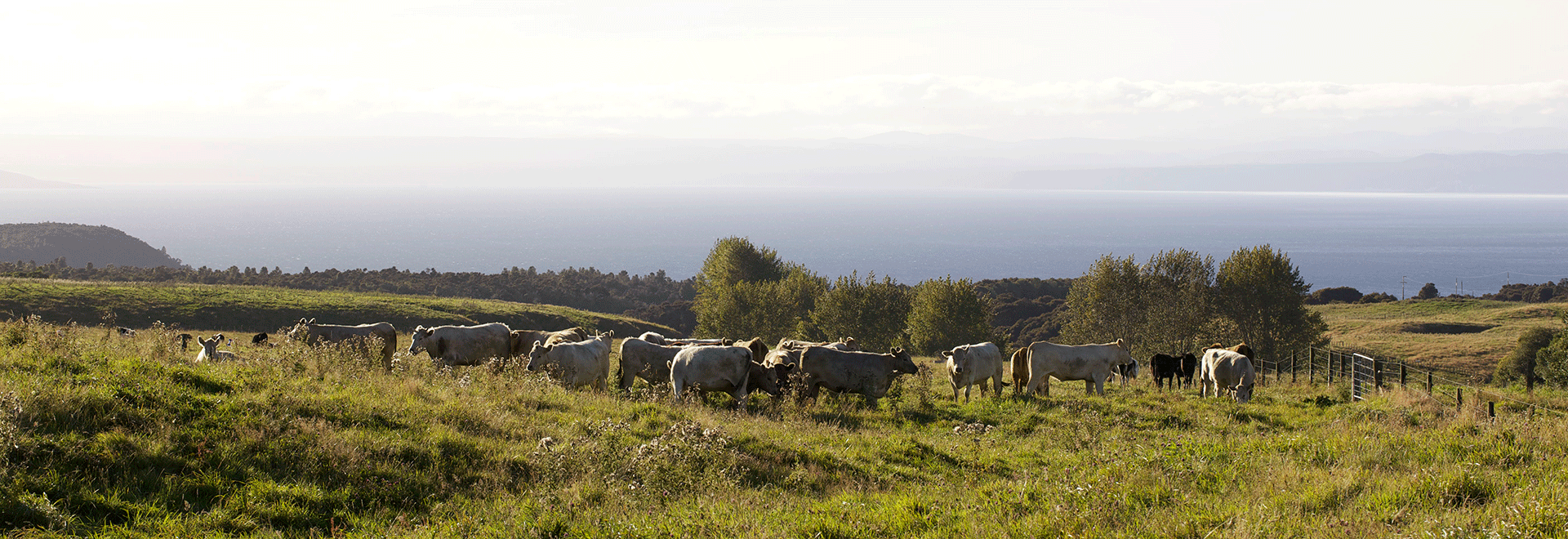
Approximately 93 per cent of the manageable nitrogen entering the lake comes from pastoral land use. Stock urine makes up a large part of this percentage. That’s because it contains high levels of nitrogen – more than plants can use or soil can store, so most of it ends up leaching down through the soil, into groundwater and rivers and ultimately into the lake. Wastewater from treated sewage and septic tank seepage has contributed around seven per cent of the manageable nitrogen load to the lake.
The risk of nitrate leaching is higher over the winter months of May, June, July and August when the soil is much wetter.
Read the rules
Rules adopted by Waikato Regional Council in March 2007 cap the amount of nitrogen leaching from rural and urban properties into Lake Taupō. You can read about these rules online, in chapter 3.10 of the Waikato Regional Plan.
Test your situation
Is farming allowed as a permitted activity in the Taupō Catchment?
If the conditions of rule 3.10.5.1 can be met – then yes, otherwise a consent is required!
a. Where the land is not used to graze stock, no more than 75 kilograms of nitrogen per hectare per year shall be applied to the land. Where the land is used to graze stock, the maximum number of animals shall be equivalent to any one row of Table 3.10.5.1 to the right:
b. Progeny of animals grazed under condition a) (such as lambs and calves) are permitted provided that no additional feed is brought on to the property except feed that is supplied as per standard industry practice to meet animal welfare requirements during the period of weaning and stocking rates return to the stock limits outline in condition a) between 1 April and 31 July each year.
c. Non-grazing domestic animals including cats, dogs, chickens and ducks that are kept for domestic purposes are permitted and are not to be taken into account for the purposes of this rule.
d. For the purpose of 1(ii) and 2 above whether or not there is sufficient ntirogen allowance for permitted activity animal numbers and wastewater, will be determined through the process for surrendering the consent.
| Animal Type | Maximum number of animals per hectare | Maximum number of animals permitted per 10 hectares |
| Dairy cow | 0.9 | 9 |
| Beef cattle | 1.2 | 12 |
| Calf (up to 12 months) | 1.8 | 18 |
| Horse | 1.1 | 11 |
| Sheep | 10.2 | 102 |
| Deer | 4.1 | 41 |
| Goat | 9.8 | 98 |
| Alpaca or Llama | 11 | 110 |
| Pig (free range) | 2.5 | 25 |
Contact us if you have any queries or need help.
Waikato Regional Council’s Taupō office
Location: 100 Horomātangi Street
Phone: 07 378 6539 or 0800 800 401
Fax: 07 378 9049
Taupō District Council
Phone: +64 7 376 0899
Email: LTPT@taupo.govt.nz