

Lake Taupō's water quality
The water quality of Lake Taupō is generally excellent. Concentrations of the plant nutrients nitrogen and phosphorus are low, and so are the levels of microscopic algae whose growth they support. This is indicated by low concentrations of the plant pigment chlorophyll a. As a result, the water is clear and blue. In addition, the bottom waters of the lake are mostly well oxygenated.
Although blooms of potentially harmful blue-green algae have occasionally been observed in the lake, for example in March 2003, so far these have not been common. However, increases in the loads of nitrogen entering Lake Taupō were identified as a threat to lake water quality.
How land use affects Lake Taupō
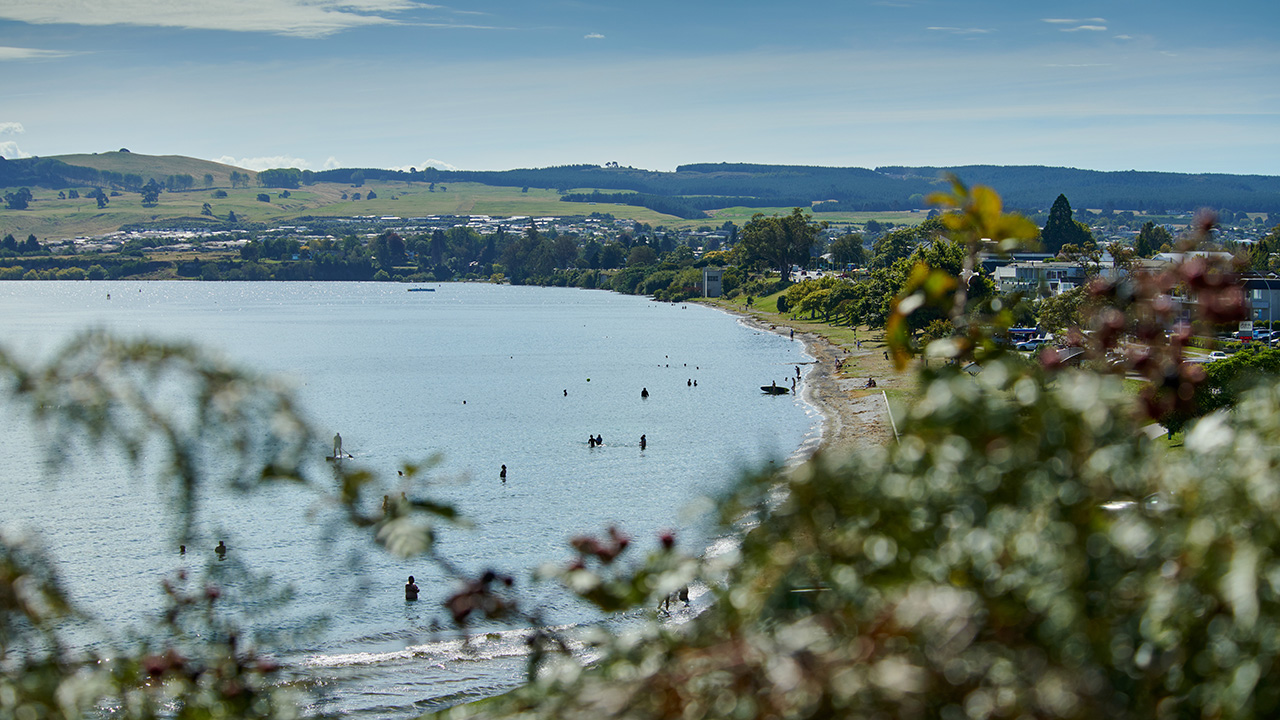
In the 1990s, concerns were raised about the effects of land use changes on the water quality of Lake Taupō. Some of the notable land use changes were:
- Government sponsored conversion of native forest and scrub to low intensity sheep and beef farms through the 1950s to 1970s
- a steady intensification of farming throughout the catchment
- the conversion of five sheep and beef farms to dairy farms.
All these were considered to be likely causes of the increases in nitrogen concentrations in rivers and streams in parts of the Lake Taupō region. Because of the age of ground water (median age ~40 y) it has taken some time for the effects of land use change in the 50s to 70s to become apparent in the lake and cause the effects the public began reporting in the late 1990s and 2000s. Calculations showed that about 94 per cent of the manageable nitrogen entering the lake came from areas of pasture in the catchment.
Quick facts about Lake Taupō
Water quality limits and measurement

Protecting Lake Taupō project’s aim, agreed with the public, has been to maintain the current water quality of the lake and prevent further decline. As a result, water quality limits have been set in the Waikato Regional Plan, which are to be met by 2080.
- Total nitrogen <70.3 (mg / m3)
- Total phosphorus <5.6 (mg / m3)
- Algae (chlorophyll a) <1,2 (mg / m3)
- Secchi disc clarity >14.6 (m)
To keep an eye on Lake Taupō’s water quality, Waikato Regional Council is operating a monitoring programme at the lake. A deep water site near the middle of the lake is visited every two to four weeks, and water samples are collected and field measurements made. The council has been doing this since 1994.